> For the complete documentation index, see [llms.txt](https://resources.viewrail.com/llms.txt). Markdown versions of documentation pages are available by appending `.md` to page URLs; this page is available as [Markdown](https://resources.viewrail.com/guides/maintenance/how-do-i-maintain-glass-railing.md).
# How Do I Maintain Glass Railing?
Learn how to clean and maintain glass railing, care for hydrophobic coatings, and understand the safety, glass thickness, and handrail factors that affect long-term performance.
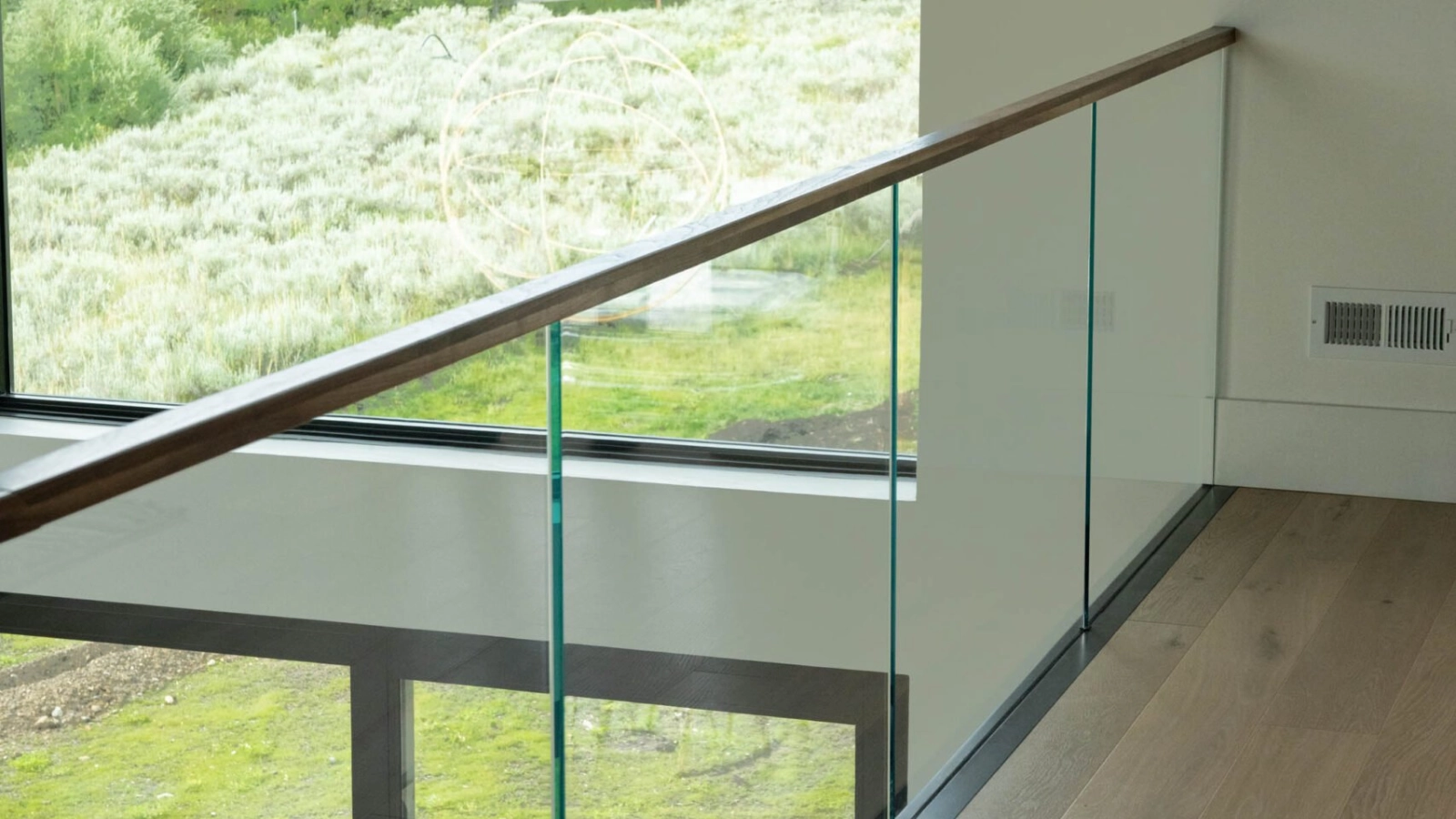
Glass railing is a great option for modern and contemporary homes and buildings. Adding glass railing to your project can give it that extra bit of modern elegance to set it apart. But everyone wants to know about two things with glass railing: safety and maintenance.
Read on to see why Viewrail glass is extremely safe, easy to live with, and simple to keep clean.
### What this guide covers
* **Safety basics** — height, glass thickness, top rails, and mounting surfaces.
* **Cleaning routine** — everyday care, seasonal deep cleaning, and safe access.
* **Coated glass care** — how hydrophobic coating changes maintenance.
### Is Glass Railing Safe?
The short answer is yes: when it's engineered and installed correctly, glass railing is one of the safest, most durable guard options you can choose.
There are no rods or cables with gaps in between, just continuous glass panels that block openings, resist weather, and don’t rust or decay. When paired with the right hardware and stabilizers, glass creates a solid, durable barrier that often outperforms traditional railing systems under load tests.
You’ll see glass railings every day in malls, stadiums, airports, and other high-traffic spaces. Those environments demand systems that can withstand heavy use, impacts, and strict inspection, which is a big part of why glass is used there.
If you’re considering glass, it’s important to understand how the following contribute to the safety of your system and follow code:
1. Guard and handrail heights
2. Glass thickness
3. Handrail requirements
4. Mounting surface and anchor type
We'll walk through each one of these below.
#### 1. Glass Railing Height
Glass railing, or "guards," follow the same height rules as other types of railing, which are intended to ensure the railing is tall enough to be an effective barrier.
Here are some typical guidelines (remember to check your local code, too):
* **Residential railings (decks, balconies, landings):** Usually at least 36" tall. Some locations require 42", even in single-family homes.
* **Commercial and multifamily railings:** Commonly 42" minimum.
* **Stair railings:** The guard along an open stair typically falls within 34–38" when it doubles as the handrail, though some areas still call for 42".
* **Pool barriers:** Many areas require a minimum 48" tall guard around pools, with special rules for gates and latches.
#### 2. Glass Thickness
Code usually doesn’t assign a single thickness, it cares more about performance: height, span, loads, and whether the panel is framed or frameless (see examples below). The specific glass makeup is defined by engineering and code reports.
Here are some common choices:
* **1/2" tempered** – often used for interior or framed residential systems
* **9/16" laminated** – typical standard for laminated glass guards, especially for frameless, commercial, rooftop, or high-wind applications
* **Thicker laminates (like 3/4")** – used in select systems or locations with higher loads or special requirements
Every Viewrail glass system uses safety glass, either [tempered or laminated](/guides/about-stairs-and-railing/what-is-glass-railing.md), designed to handle impact and reduce the risk of injury if it ever breaks. Your engineering drawings from Viewrail will call out the exact glass type and thickness based on your system, height, span, and location.
Learn more about [glass railing code requirements](/guides/about-stairs-and-railing/what-is-glass-railing.md) here.
{% columns %}
{% column %}
#### Framed Glass
{% endcolumn %}
{% column %}
#### Frameless Glass
{% endcolumn %}
{% endcolumns %}
#### 3. Handrails and Top Rails
When you think about safety, it’s not just the glass itself, it’s how people use the system day to day. A handrail is a graspable element you hold as you go up and down stairs. A top rail or cap rail ties the glass panels together so the guard stays in place, even if a panel were to crack. In many designs, the top of the guard can double as the handrail as long as it meets handrail usability rules.
With Viewrail, you've got options. You can:
* Mount a graspable handrail directly to the glass
* Use a metal or wood cap rail that doubles as the handrail on stairs
* Pair a glass guard with a separate wall-mounted handrail
Your project manager will work with your Viewrail team to match the handrail approach to code and to how you want the system to feel in everyday use.
{% columns %}
{% column %}
#### No Rail
{% endcolumn %}
{% column width="33.33333333333333%" %}
#### Handrail
{% endcolumn %}
{% column width="33.33333333333333%" %}
#### Top Rail
{% endcolumn %}
{% endcolumns %}
#### 4. Mounting Surfaces
The single most important factor for glass safety beyond the glass itself is the strength of the structure you’re mounting to. Viewrail [glass railing systems](/guides/planning/how-can-i-customize-my-glass-railing/choose-your-glass-system.md) include glass posts, base rail, Talon Spigots, Ascend Talons, and Standoff Pins, and they are designed to work with a variety of surfaces, including concrete, engineered flooring, hardwood, and composite decking.
Depending on your structure, you may need to use blocking or steel to reinforce the framing. Another option is to use through-bolts instead of lag screws. And, you may adjust your anchor spacing to provide additional support.
Each scenario is different, so it’s always good to check with your glass railing manufacturer on mounting material requirements and whether you should through bolt or lag.
### How Viewrail Tests Safety
All Viewrail glass railing systems are engineered as complete assemblies (glass, hardware, posts or a base, and anchors) to meet or exceed IRC/IBC requirements for guard and handrail loads. Our Base Rail, Talon, and Standoff Pin systems specifically are backed by [ICC-ES evaluation reports](https://www.viewrail.com/icc-certifications/).
Because we cut, temper, laminate, and fabricate glass in-house, we can monitor quality at every step and test panels well beyond minimum standards.
### Quick maintenance routine
{% stepper %}
{% step %}
#### Remove loose debris
Start with a dry wipe or a light rinse. Remove dust, pollen, and surface dirt before you use cleaner.
{% endstep %}
{% step %}
#### Clean the glass
Use a microfiber cloth and an ammonia-free glass cleaner. Spray the cloth, not the panel, then wipe and dry.
{% endstep %}
{% step %}
#### Deep clean when buildup appears
Use a garden hose or low-pressure pressure washer for stuck-on grime. Finish with glass cleaner for a clear surface.
{% endstep %}
{% step %}
#### Clean safely and protect the finish
Use an extension tool for exterior faces. Avoid abrasives, harsh chemicals, and metal scrapers.
{% endstep %}
{% endstepper %}
### How to clean and maintain glass railing
Because glass is transparent, it’s honest: it will show dust, pollen, salt spray, and fingerprints. The good news is that it’s simple to keep clean, and with the right glass treatment, you’ll clean it less often.
In most environments, a few light cleanings a year are enough to keep your glass railing looking clear. In harsher settings (e.g, coastal, high-pollen, or near busy roads), you may want to wipe the panels down more frequently.
#### Everyday Cleaning
For standard (uncoated) glass panels:
* Use the same type of ammonia-free glass cleaner you’d use on windows or mirrors.
* Spray the cleaner onto a microfiber cloth, not directly on the glass, to reduce streaking.
* Wipe in smooth, overlapping passes and polish dry with a clean section of the cloth.
A little cleaner goes a long way. For interior glass, cleaning it as often as you dust or wipe other surfaces typically keeps it crystal clear. For exterior glass, you’ll likely want to clean it more regularly, especially after dirty storms or heavy pollen.
#### Deep Cleaning
If your glass has gone a season (or a winter) without attention, start with a rinse:
1. Use a garden hose or pressure washer on low pressure, standing back from the glass.
2. Rinse away loose dirt, salt, and buildup.
3. Move closer or gently increase pressure only as needed.
4. Finish with a microfiber cloth and glass cleaner to remove any remaining film.
Never use abrasive pads, harsh chemicals, or metal scrapers. They can scratch the glass or damage any protective coatings.
#### Hard-to-Reach Areas
{% hint style="warning" %}
Never lean over a guard to reach the outside of a panel.
Use an extendable squeegee or a microfiber sleeve on a pole instead. That lets you clean the outer face from behind the guard.
{% endhint %}
### Hydrophobic Coating: Easier, Less Frequent Cleaning
If you want to spend less time cleaning and more time enjoying the view, consider upgrading your glass with a hydrophobic coating.
Viewrail offers Invisible Shield® PRO15 as a premium hydrophobic coating option on all of our glass panels. It’s a professional-grade, high-performance poly-siloxane treatment that seals the surface of the glass, making it more resistant to soiling, staining, pitting, and scratching over time. And it’s backed by a [competitive warranty](https://www.viewrail.com/warranty/) for both interior and exterior applications.
What a hydrophobic coating does for you:
* Repels water and contaminants – Water beads up and runs off more easily, taking dirt and minerals with it.
* Keeps glass cleaner longer – You’ll clean less often, and most routine cleanings go faster.
* Reduces the need for harsh cleaners – In many cases, you can clean coated glass with just water and a soft cloth.
* Adds protection – Helps resist up to 92% of scratches and reduces long-term wear from environmental exposure.
**How to Care for Hydrophobic-Coated Glass**
For coated glass, follow these simple rules:
{% columns %}
{% column %}
**Do use**
* a soft cloth, pad, or paper towel.
* compatible cleaners such as traditional ammonia-free glass cleaner or REPEL® Glass & Surface Cleaner.
{% endcolumn %}
{% column %}
**Don’t use**
* abrasive cleaners, including powders or gritty creams.
* acids, strong alkalis, or other harsh chemicals.
* abrasive tools, scrapers, or aggressive daily squeegeeing.
{% endcolumn %}
{% endcolumns %}
Hydrophobic coatings don’t make glass truly “self-cleaning,” you’ll still do occasional rinsing and wipe-downs, but they dramatically reduce how often and how hard you have to clean, especially outside.
### Glass Railings: Safe, Clean, and Built to Last
When you pair code-compliant glass, engineered hardware, and a solid mounting structure, glass railing is an extremely safe and durable guard system for stairs, decks, and balconies. With regular cleaning (and an optional hydrophobic coating) you get crystal-clear views with minimal effort.
If you’re planning a project and want help dialing in glass type, height, thickness, or coatings, our team can walk through your code requirements, environment, and design goals and recommend the right Viewrail system for your space.
### Related topics
#### Understand and compare
* [What is Glass Railing?](/guides/about-stairs-and-railing/what-is-glass-railing.md) — Review system types, glass options, and code basics.
* [What Railing Should I Choose for My Stairs?](/guides/planning/choose-the-right-railing-for-your-project/what-railing-should-i-choose-for-my-stairs.md) — Compare glass with other modern stair railing options.
* [How Do I Maintain Cable Railing?](/guides/maintenance/how-do-i-maintain-cable-railing.md) — Compare glass cleaning with cable upkeep and retensioning.
* [Wood Stair Tread and Handrail Maintenance Guide](/guides/maintenance/how-do-i-maintain-wood-stair-treads-and-handrails.md) — Care for wood rails and stair treads.
#### Plan your glass project
* [How Much Does Glass Railing Cost?](/guides/pricing/how-much-does-glass-railing-cost.md) — See the main price drivers for glass systems.
* [How Can I Customize My Glass Railing?](/guides/planning/how-can-i-customize-my-glass-railing.md) — Explore system, glass, finish, and mounting choices.
* [Choose a Handrail or Top Cap](/guides/planning/how-can-i-customize-my-glass-railing/choose-a-handrail-or-top-cap.md) — Pick the right top rail or handrail setup.
---
# Agent Instructions
This documentation is published with GitBook. GitBook is the documentation platform designed so that both humans and AI agents can read, navigate, and reason over technical content effectively. Learn more at gitbook.com.
## Querying This Documentation
If you need additional information that is not directly available in this page, you can query the documentation by asking a question.
Perform an HTTP GET request on the following URL with the `ask` and `goal` query parameters:
```
GET https://resources.viewrail.com/guides/maintenance/how-do-i-maintain-glass-railing.md?ask=&goal=
```
`ask` is the immediate question: it should be specific, self-contained, and written in natural language.
`goal` is what the user is ultimately trying to achieve, the reason they need the answer. Sharing it helps GitBook give you a better, more relevant answer. A goal is most helpful when it describes the outcome the user wants rather than restating the question. For example, with `ask=how do I create an API token`, a goal like `automate deployments from our CI pipeline` lets GitBook tailor the answer to that use case.
The response will contain a direct answer to the question and relevant excerpts and sources from the documentation.
Use this mechanism when the answer is not explicitly present in the current page, you need clarification or additional context, or you want to retrieve related documentation sections.