> For the complete documentation index, see [llms.txt](https://resources.viewrail.com/llms.txt). Markdown versions of documentation pages are available by appending `.md` to page URLs; this page is available as [Markdown](https://resources.viewrail.com/guides/about-stairs-and-railing/what-is-cable-railing.md).
# What is Cable Railing?
Learn what cable railing is, how a cable railing system works, what cable railing costs, and where to use it on decks, stairs, balconies, and other modern spaces.
[Cable railing](https://www.viewrail.com/cable-railing/) is a popular modern railing system that runs tensioned stainless steel cables horizontally between posts. It keeps your views open, works in both interior and exterior settings, and delivers the clean, contemporary look that's increasingly common on decks, stairs, balconies, and lofts.
If you are comparing systems, see [What is Glass Railing?](/guides/about-stairs-and-railing/what-is-glass-railing.md), [Should I Buy Cable Or Rod Railing?](/guides/planning/choose-the-right-railing-for-your-project/cable-railing-vs.-rod-railing-which-one-is-right-for-your-project.md), and [How Can I Customize my Cable Railing?](/guides/planning/how-can-i-customize-my-cable-railing.md).
### Why homeowners choose cable railing
When choosing a modern railing system, cable railing is an easy choice for a number of reasons:
**Unobstructed views.** The slim cable profile is nearly invisible compared to wood balusters or iron, making it a favorite for properties with mountain, water, or yard views.
**Versatility.** Cable railing works indoors and outdoors, on decks, stairs, balconies, and interior lofts. Multiple post types, mounting styles, and finishes make it adaptable to most projects.
**DIY-friendly.** With pre-cut, pre-drilled posts and clear installation guides, cable railing is manageable for motivated DIYers. At Viewrail, we offer step-by-step instructions and [video installation guides](https://www.youtube.com/@Viewrail) to support you through the process.
**Long-term value.** A well-installed cable railing system adds curb appeal and home value. It outperforms traditional wood railing in durability and requires significantly less upkeep over time.
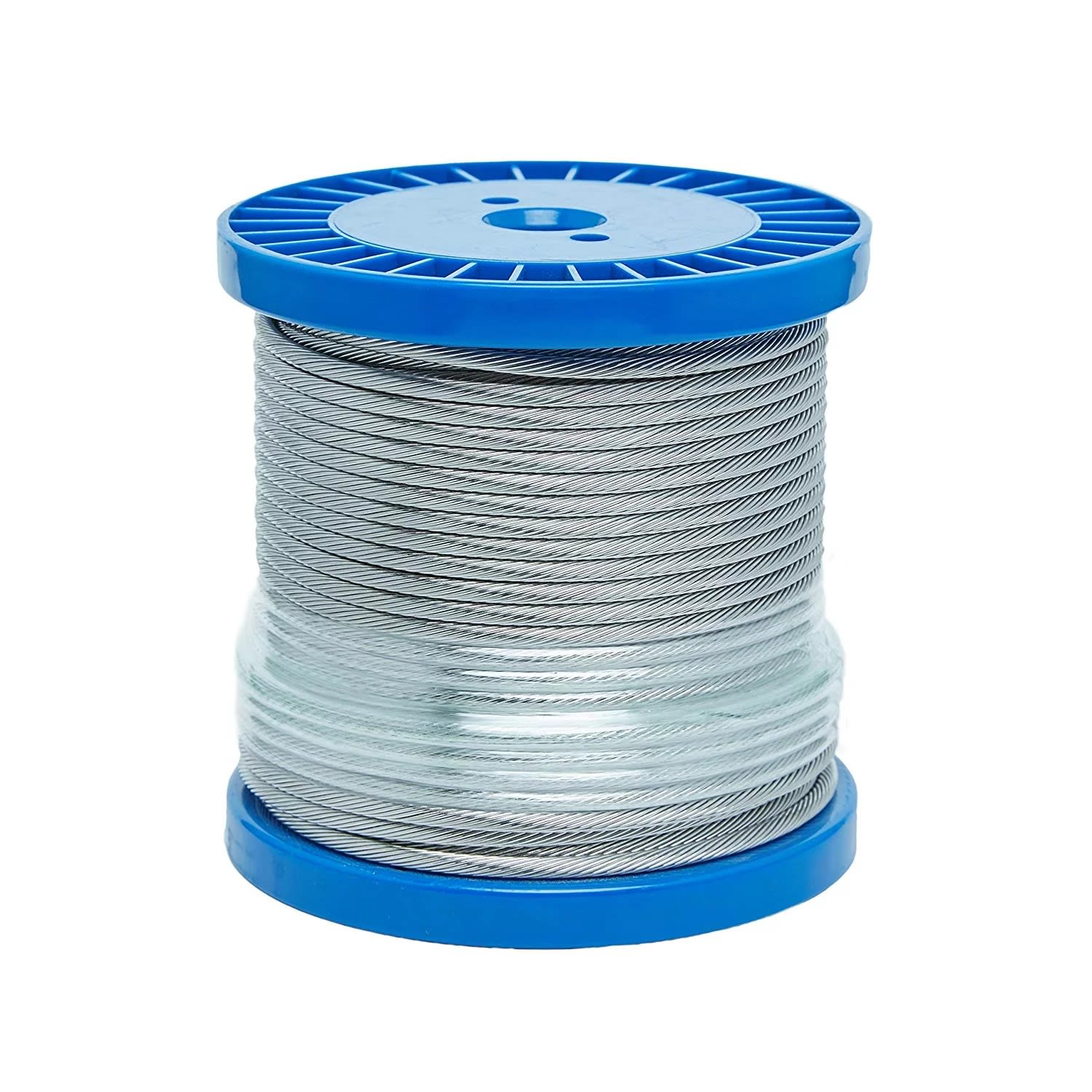
**Design flexibility.** Cable comes on a spool, which gives you a lot of flexibility for custom run lengths and complex layouts.
#### Trade-offs to know
**Installation takes time.** Tensioning individual cable runs is repetitive and can be time-consuming, especially on larger projects.
**Local code restrictions.** Some municipalities prohibit horizontal railing infill. Always check with your local building department before purchasing.
**Higher upfront cost than wood.** Cable railing sits in the "modern railing" tier, which costs more initially than traditional wood or iron baluster systems.
### Types of cable railing systems
#### Swaged vs. swageless fittings
The two main ways to attach cable to its fittings are swaged and swageless systems.
**Swaged systems** are the most common. Swaging means using force to compress a metal fitting directly onto the cable, creating a permanent, high-strength connection. Viewrail uses handheld cable crimpers for this process, driving stainless steel fittings tightly onto the cable ends.
**Swageless systems** use proprietary fittings with a mechanical locking mechanism. The cable is inserted and locked in place without compression. These fittings are typically visible on the outside of the post.
#### Metal posts vs. wood posts
**Metal posts** are the most popular choice today. They offer a sleek, modern profile, require minimal maintenance, and can be smaller than wood posts while meeting or exceeding strength requirements. Viewrail offers both aluminum and 304 stainless steel metal posts.
**Wood posts** are a good option when you want cable railing's look but with a warmer, more traditional feel. Wood post systems are often more budget-friendly, but exterior wood posts will need annual maintenance. Code typically requires a minimum 4×4 post for structural integrity. Viewrail's [**DriveTite**](https://www.viewrail.com/cable-railing/drivetite/) system is designed specifically to tension cable into wood posts. If you are planning a wood-post project, use [How do I Install DriveTite Cable Railing?](/guides/install/how-do-i-install-a-cable-or-rod-railing-system/how-do-i-install-drivetite-cable-railing.md). If you are deciding between post materials, see [Wood vs Metal Railing Posts: Which Is Better for Cable Railing?](/guides/planning/choose-the-right-railing-for-your-project/wood-vs-metal-railing-posts-which-is-better-for-cable-railing.md).
### How much does cable railing cost?
A complete cable railing system, including posts, handrails, cable, and hardware, typically ranges from $80 to $270 per linear foot. The wide range reflects real differences in post material, infill type, mounting style, and project complexity.
Here's a general breakdown by material:
* **Wood posts with cable infill** — The most budget-friendly option. Using a product like DriveTite (without purchasing new posts) can bring infill costs down significantly.
* **Aluminum posts** — Aluminum cable railing systems run approximately $150–$240 per linear foot, which is about 30% less than stainless steel.
* **Stainless steel posts** — Premium option with the highest durability. Expect to pay toward the top of the range.
Cable and rod railing are both more affordable than [glass railing](/guides/about-stairs-and-railing/what-is-glass-railing.md), which averages $230–$400 per linear foot. That said, cable railing isn't a budget system, it's a high-performing investment that tends to outperform traditional railing over its lifetime.
For a deeper pricing breakdown, see [How much does Viewrail Cable Railing Cost?](/guides/pricing/how-much-does-viewrail-cable-railing-cost.md). For a project-specific quote, use the [Viewrail Railing Design Tool](https://design.viewrail.com/external/-/editor?_gl=1*163bwtv*_gcl_au*MjAxNjM5MDY5Ni4xNzc0ODc3OTAz) or [request a quote](https://www.viewrail.com/quote/) directly.
#### Indoor vs. outdoor system considerations
Post and handrail material matters differently depending on where your railing will live.
**Aluminum** is lighter, easier to work with, and more affordable. Viewrail's premium powder coat carries a 5-year finish warranty covering fading, adhesion, and corrosion from finish failure. One important caveat: the [Express](https://www.viewrail.com/cable-railing/express/) aluminum system should not be used within 10 miles of a saltwater coast.
**304 stainless steel** offers excellent strength and a high-end brushed finish. It's a great choice for most exterior projects, though cable infill, because of the braided texture of the wire, can trap moisture in its grooves over time.
**For coastal or harsh-environment projects**, We recommend upgrading to **rod infill**. Rod infill is a great alternative to cable wire — similar in profile and aesthetic, but made from 2205 duplex stainless steel with a smooth, groove-free surface that eliminates the corrosion points cable wire can develop. The smooth surface also means no re-tensioning over time.
### Cable railing system components
A cable railing system is built from four core components:
* **End posts (termination posts)** — These anchor the ends of each cable run. Tensioners and receivers are installed into end posts, which hold the infill taut.
* **Line posts** — These intermediate posts support the cables as they pass through, but don't create tension. The cable threads through them continuously.
* **Top rail** — The handrail that runs along the top of the posts. It's secured into the posts for stability and provides the graspable surface required by code on stairs.
* **Infill** — The horizontal material that spans between posts. In a cable railing system, the infill is stainless steel wire cable, typically 5/32" in diameter.
You may also encounter **intermediate posts** on longer runs. If two posts are spaced farther than 4 feet apart, an intermediate post can be added between them to limit cable deflection.
### Cable Railing Hardware and Fittings
Every cable railing kit includes three types of hardware:
1. **Tensioners** — Installed at one or both ends of a cable run. These are tightened to pull the cable taut and keep the system firm.
2. **Cable holders (line post fittings)** — Locked onto the cable at intermediate posts. They hold the cable in place without creating tension.
3. **Aesthetic hardware** — Typically washers or covers that conceal the point where cable enters or exits a post. These clean up the look while also protecting the post material from direct cable contact.
### Where can you install cable railing?
The most common applications are deck railing, stair railing, and balconies, but cable railing works in a wide variety of spaces — interior loft railings, mezzanine guards, and exterior walkways are all fair game.
The main constraint is local code. Some jurisdictions don't permit horizontal infill systems. Always confirm with your local building department before you purchase.
For specific mounting configurations and post types, see [What Cable Railing Post Mounting Styles Are There?](/guides/planning/choose-the-right-railing-for-your-project/cable-railing-post-mounting-styles-compared.md). For installation guidance, see [How Do I Install a Cable Railing System?](/guides/install/how-do-i-install-a-cable-or-rod-railing-system.md). If you are keeping wood posts, use [How do I Install DriveTite Cable Railing?](/guides/install/how-do-i-install-a-cable-or-rod-railing-system/how-do-i-install-drivetite-cable-railing.md).
#### Can cable railing curve?
Yes, but it works differently than you might expect. Cable is linear, so it won't bend into a smooth arc — instead, it angles from post to post, creating the visual impression of a curve. The more posts you add, the more gradual (and convincing) that curve looks.
If you want a true curve with fewer posts, Viewrail's [**Onyx**](https://www.viewrail.com/cable-railing/rod-railing/) or [**rod infill**](https://www.viewrail.com/cable-railing/endurance-rod/) can be physically bent to follow a radius, giving you a smoother curved railing with less visual interruption.
### How to buy cable railing
#### Step 1: Gather your measurements
For a level deck, measure the total "outside to outside" distance of each railing run. That's really all you need to get started.
For stairs, you'll need the **rise** and **run** of your steps:
* **Rise** = the vertical distance from the top of one tread to the top of the next.
* **Run** = the horizontal depth of each tread, minus any nosing overhang (this is your "net run").
These measurements allow Viewrail to provide the correct angle tension kits and ensure the cable doesn't contact your stair nosing.
#### Step 2: Plan your post spacing
Keep post spacing at or under 4 feet (face to face) for both level and stair runs. This keeps your system structurally sound and code-compliant. On stairs, measure that 4-foot maximum along the diagonal face of the post, not horizontally.
When ordering cable and handrail for stairs, measure the full diagonal length of the run and add about a foot. A little extra is far better than coming up short.
#### Step 3: Choose your post type and mounting style
Once you have measurements and a sense of the layout, decide on your post material and mounting configuration. Viewrail offers multiple post mounting options for our [Signature system](https://www.viewrail.com/cable-railing/signature-cable-railing/), each suited to different structural conditions and aesthetic preferences. [Express](https://www.viewrail.com/cable-railing/express/) is available in both surface and side mount options. See [Cable Post Mounting Styles](/guides/planning/choose-the-right-railing-for-your-project/cable-railing-post-mounting-styles-compared.md) for a full breakdown.
Also consider railing height. Code requirements for stair handrails are 34"–38". For level deck guards, the IRC residential minimum is 36", though many jurisdictions and commercial projects require 42". Viewrail manufactures systems at 36" as a standard, with options up to 42". Always verify your local requirements before finalizing.
#### Step 4: Select your finish
Viewrail offers both aluminum and 304 stainless steel posts. All metal products carry a **10-year structural warranty**. For finish:
* **2205 brushed stainless steel** — 5-year finish warranty. Requires regular application of Marine 31 Polish and Sealant to maintain coverage.
* **Superior Performance Powder Coat** — 5-year finish warranty covering fading, adhesion, and corrosion from finish failure.
* **Standard Powder Coat** — 1-year finish warranty covering normal use.
If your project is in a coastal environment or extreme climate, Viewrail recommends upgrading to the rod infill system rather than cable.
#### Step 5: Choose your cable kits
For our Signature system, there are three main kit types matched to how and where the cable is tensioned:
* **Angle Tension Kits** — Used on stair runs, where the cable travels at an angle.
* **Level Tension Kits** — Used on level runs, such as decks and balconies.
* **Inside Post Mount Kits** — Used where the cable hardware mounts to the inside face of the post rather than threading through it.
There are also two intermediate hardware kits (adhesive sleeve kits and steel insert sleeve kits) for posts added between standard spacing to control cable deflection on longer runs.
Kit quantities are determined by system height:
* 36" system: 10 packs
* 39" system: 11 packs
* 42" system: 12 packs
For level railing, just provide your outside-to-outside measurements and Viewrail will handle the rest. Cable and handrail are cut slightly long to ensure a perfect fit.
### How to Maintain Cable Railing
Cable railing is low maintenance, but a little routine care keeps it looking sharp, especially outdoors.
**Cleaning:** If you notice buildup on posts or cables, wipe it down with a stainless steel cleaner and a cloth. For tougher spots, a Scotch-Brite pad works well.
**Surface rust:** A small amount of surface rust can appear on exterior stainless steel over time. This is a surface condition, not structural corrosion. A stainless steel cleaner will typically remove it. If needed, follow up with a Scotch-Brite pad for stubborn spots.
**Protective treatment:** For exterior installations, Viewrail recommends applying Marine 31 Polish and Sealant to exposed stainless steel, particularly to cable wire, which has more texture and surface area than rod infill. Regular use of Marine 31 is also required to maintain your stainless steel finish warranty.
**Re-tensioning:** Cable can stretch slightly after installation. Check your runs periodically and re-tighten any that have gone slack. Rod infill doesn't have the same issue, once it's set, it stays put.
**Wood post care:** If your system uses wood posts outdoors, plan to inspect and treat them annually to prevent weathering and decay.
For more detail, see [How Do I Maintain Cable Railing?](/guides/maintenance/how-do-i-maintain-cable-railing.md).
### Frequently Asked Questions
Is cable railing more expensive than wood?
Generally, yes. Cable railing has a higher upfront cost than traditional wood or iron baluster systems. However, cable railing is more durable, requires less maintenance, and holds up better over time — factors that can offset the initial investment for many homeowners.
Do cable railing posts need to be closer together than wood?
Yes. Cable can sag or deflect over longer spans, so post spacing is kept tighter than a typical wood baluster system. Plan for posts at 4 feet on center as a baseline. The exact spacing you need depends on cable diameter, run length, and railing height — all of which factor into both performance and code compliance.
What size is cable railing wire?
Viewrail uses 5/32" diameter stainless steel wire rope as its standard cable size.
### Related topics
#### Compare systems
* [What is Glass Railing?](/guides/about-stairs-and-railing/what-is-glass-railing.md) — Compare visibility, maintenance, and cost.
* [Should I Buy Cable Or Rod Railing?](/guides/planning/choose-the-right-railing-for-your-project/cable-railing-vs.-rod-railing-which-one-is-right-for-your-project.md) — Choose the right infill for your layout and environment.
* [Wood vs Metal Railing Posts: Which Is Better for Cable Railing?](/guides/planning/choose-the-right-railing-for-your-project/wood-vs-metal-railing-posts-which-is-better-for-cable-railing.md) — Compare durability, upkeep, and style.
#### Plan your project
* [How much does Viewrail Cable Railing Cost?](/guides/pricing/how-much-does-viewrail-cable-railing-cost.md) — Review price ranges by material and layout.
* [What Cable Railing Post Mounting Styles Are There?](/guides/planning/choose-the-right-railing-for-your-project/cable-railing-post-mounting-styles-compared.md) — Match your structure to the right mount.
* [How Can I Customize my Cable Railing?](/guides/planning/how-can-i-customize-my-cable-railing.md) — Explore finishes, handrails, and post options.
#### Install and maintain
* [How Do I Install a Cable Railing System?](/guides/install/how-do-i-install-a-cable-or-rod-railing-system.md) — See the install sequence and required prep.
* [How do I Install DriveTite Cable Railing?](/guides/install/how-do-i-install-a-cable-or-rod-railing-system/how-do-i-install-drivetite-cable-railing.md) — Follow the dedicated wood-post cable install guide.
* [Can I Install Cable Railing Myself?](broken://spaces/YiIQ32eyDEEMOXuUTd8u/pages/hfzS4NElJ6PyabWq4Kxt) — Decide whether DIY fits your project.
* [How Do I Maintain Cable Railing?](/guides/maintenance/how-do-i-maintain-cable-railing.md) — Learn cleaning, re-tensioning, and exterior care.
---
# Agent Instructions
This documentation is published with GitBook. GitBook is the documentation platform designed so that both humans and AI agents can read, navigate, and reason over technical content effectively. Learn more at gitbook.com.
## Querying This Documentation
If you need additional information that is not directly available in this page, you can query the documentation by asking a question.
Perform an HTTP GET request on the following URL with the `ask` and `goal` query parameters:
```
GET https://resources.viewrail.com/guides/about-stairs-and-railing/what-is-cable-railing.md?ask=&goal=
```
`ask` is the immediate question: it should be specific, self-contained, and written in natural language.
`goal` is what the user is ultimately trying to achieve, the reason they need the answer. Sharing it helps GitBook give you a better, more relevant answer. A goal is most helpful when it describes the outcome the user wants rather than restating the question. For example, with `ask=how do I create an API token`, a goal like `automate deployments from our CI pipeline` lets GitBook tailor the answer to that use case.
The response will contain a direct answer to the question and relevant excerpts and sources from the documentation.
Use this mechanism when the answer is not explicitly present in the current page, you need clarification or additional context, or you want to retrieve related documentation sections.

.png?alt=media&token=8ca7371f-dcab-4df5-893e-9e19a0911cda)